Be found by what it makes
A kitchen searches for a koay teow manufacturer in Penang, often without knowing the name Eco Fresh. The product and the place had to lead the page and the search result.
Eco FreshFood manufacturing · Supplier website
The website for Eco Fresh, a koay teow and chili boh maker in Bukit Mertajam, Penang. It shows hotels, canteens and hawkers a working factory, and keeps the hand of the woman who started it in every heading.
Eco Fresh is a Penang food manufacturer based in Bukit Mertajam. It makes fresh koay teow and chili boh in-house and supplies noodles and related food products to restaurants, hotels, canteens and other food businesses. The business began about forty years ago with one woman, Madam Ng Giew Poh, making koay teow by hand. Potadot designed and built its website as one English page with no menu. Every chapter heading runs in two voices: heavy, steady letters for the factory and a chili-red brush line for the people behind it.
Eco Fresh Enterprise works from Bandar Perda in Bukit Mertajam, on the Penang mainland. Madam Ng Giew Poh started the business about forty years ago, making koay teow by hand, from choosing the rice and grinding the batter to the steaming. Chilli sauce followed around fifteen years ago.
Today Eco Fresh makes koay teow and chili boh in-house and supplies a wider range that includes yellow noodles, bihun, laksa noodles, tofu, fish balls and bean sprouts. Its customers run from hawker stalls and factory canteens to hotels, hospitals and schools, on Penang Island and the mainland.
Whoever buys koay teow for a hotel or a canteen needs it every day, at the same quality. Before they call a new supplier, they want to know who makes the food and whether it passes their checks.
A kitchen searches for a koay teow manufacturer in Penang, often without knowing the name Eco Fresh. The product and the place had to lead the page and the search result.
Eco Fresh makes its own koay teow and chili boh. That is its strongest point, and the site had to let buyers see it as well as read it.
Hotels, schools and hospitals need these details before they order. So they get a chapter of their own, with the logos in view.
Eco Fresh is open from 6:30am to 7:30pm, every day. A cook who runs short should find a number to message straight away.
Eco Fresh has two things to prove at once. It is a manufacturer that can supply a hotel every day, and it is still the business one woman built by hand. A factory photo alone loses the second point, and a founder’s story alone loses the first. So every chapter heading speaks in both voices. Heavy letters state the fact, and a chili-red brush line adds the human part: in Penang, Since the 1980s, Choose Eco Fresh. All eleven headings work this way, from the first screen to the contact form.
 1
Line
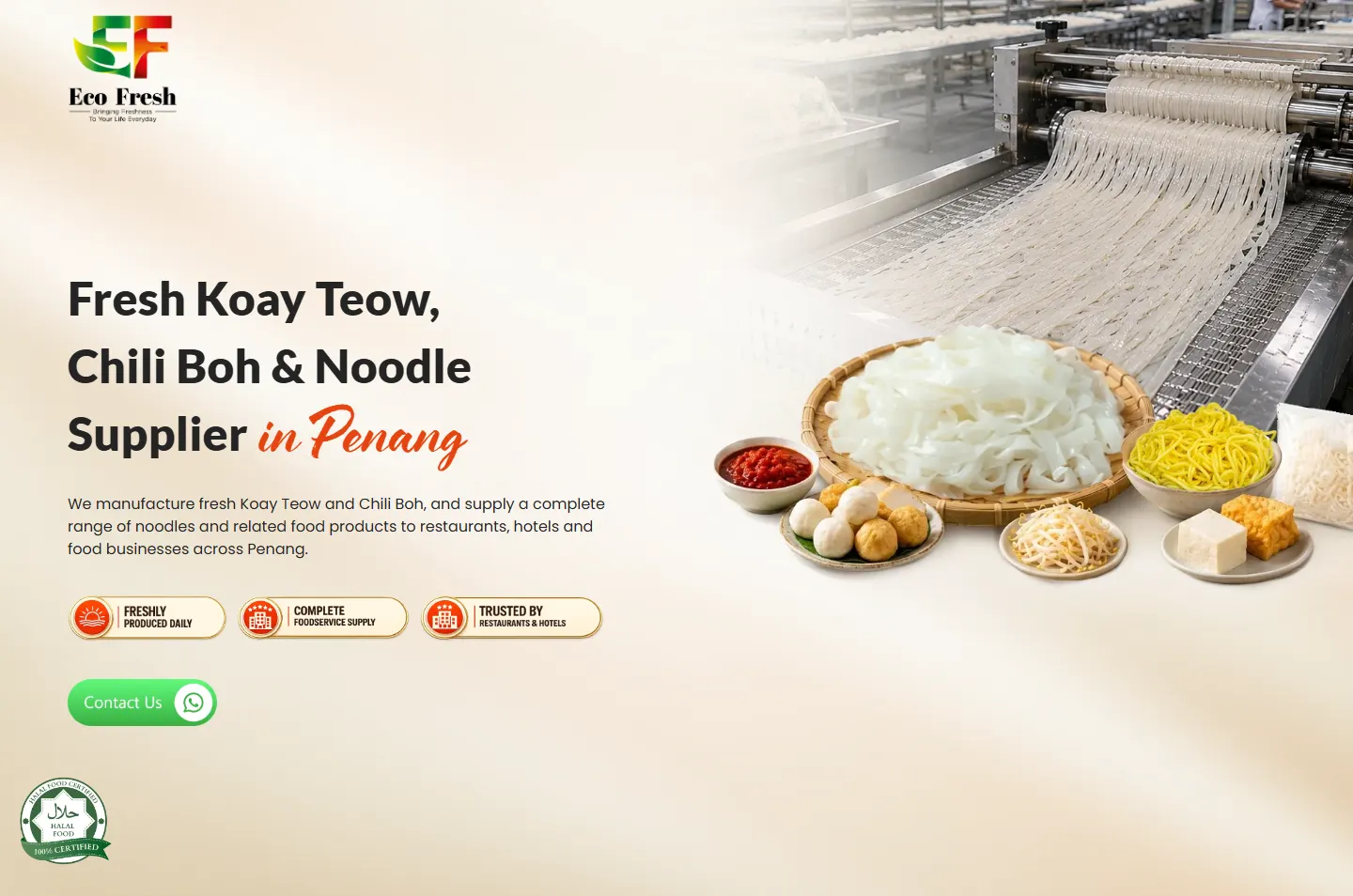
Koay teow runs along the machine towards a tray of food.
 2
Range
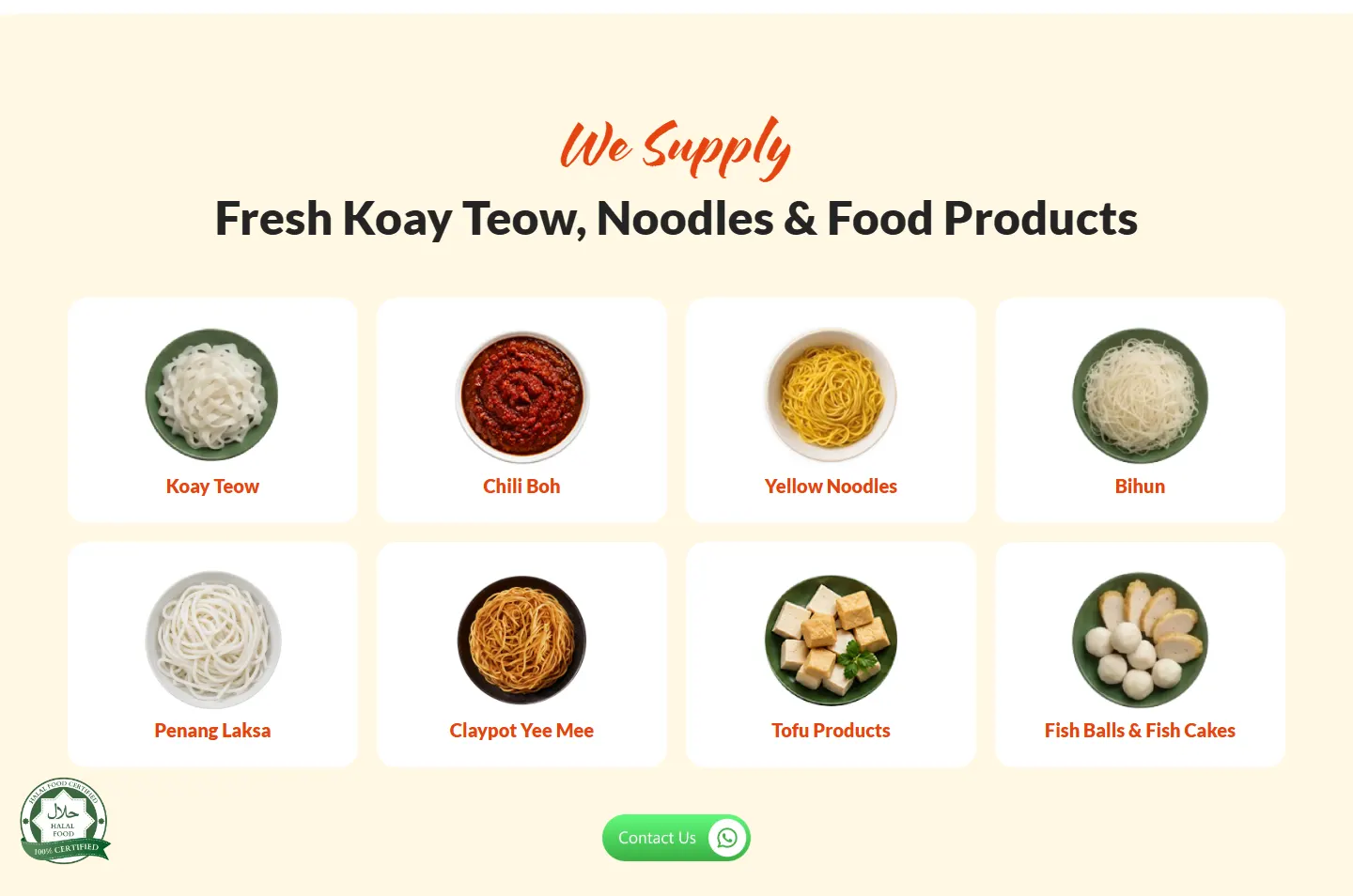
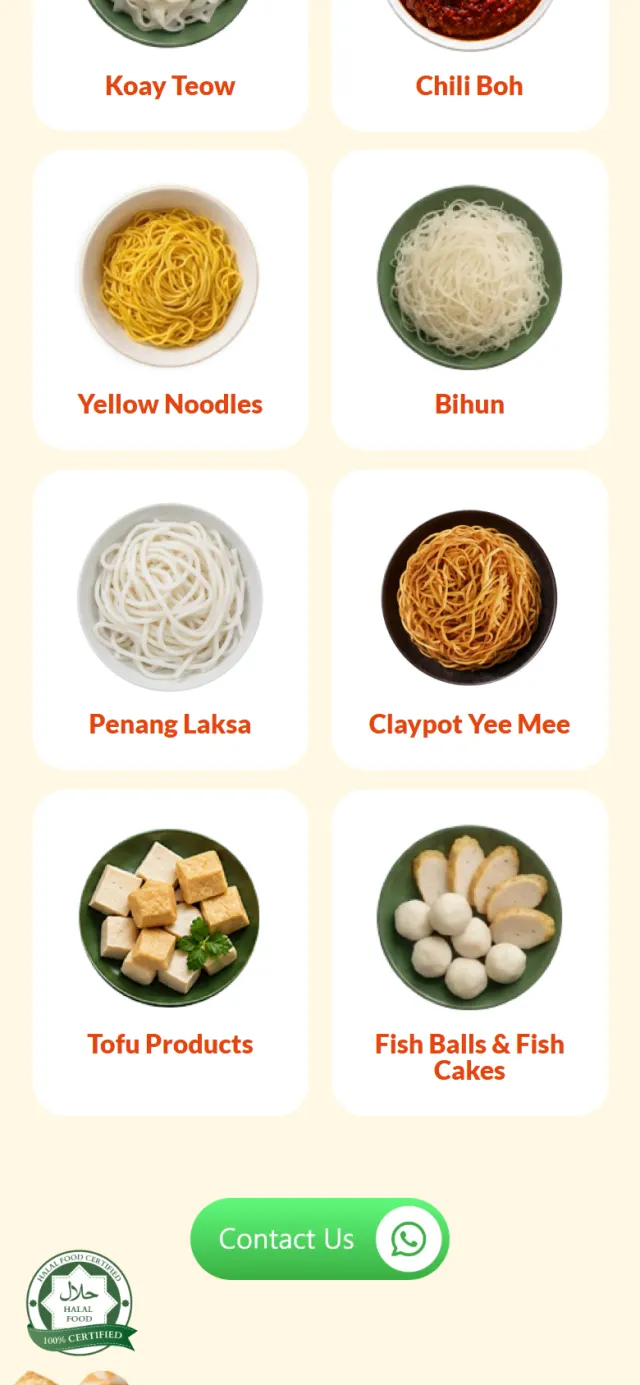
Eight products, one card each.
 3
Hands
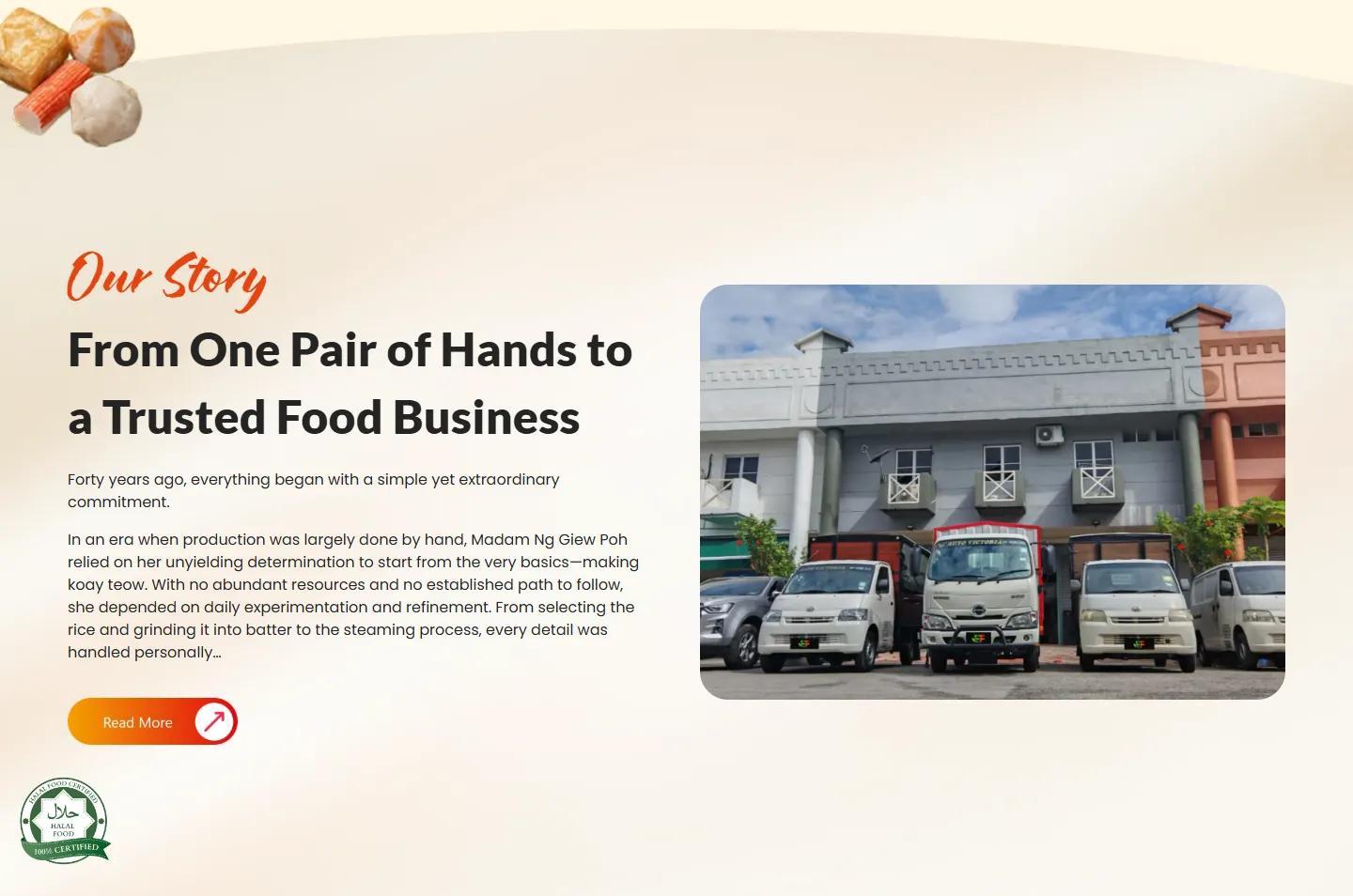
The founder’s story, beside the premises and its trucks.
 4
Factory
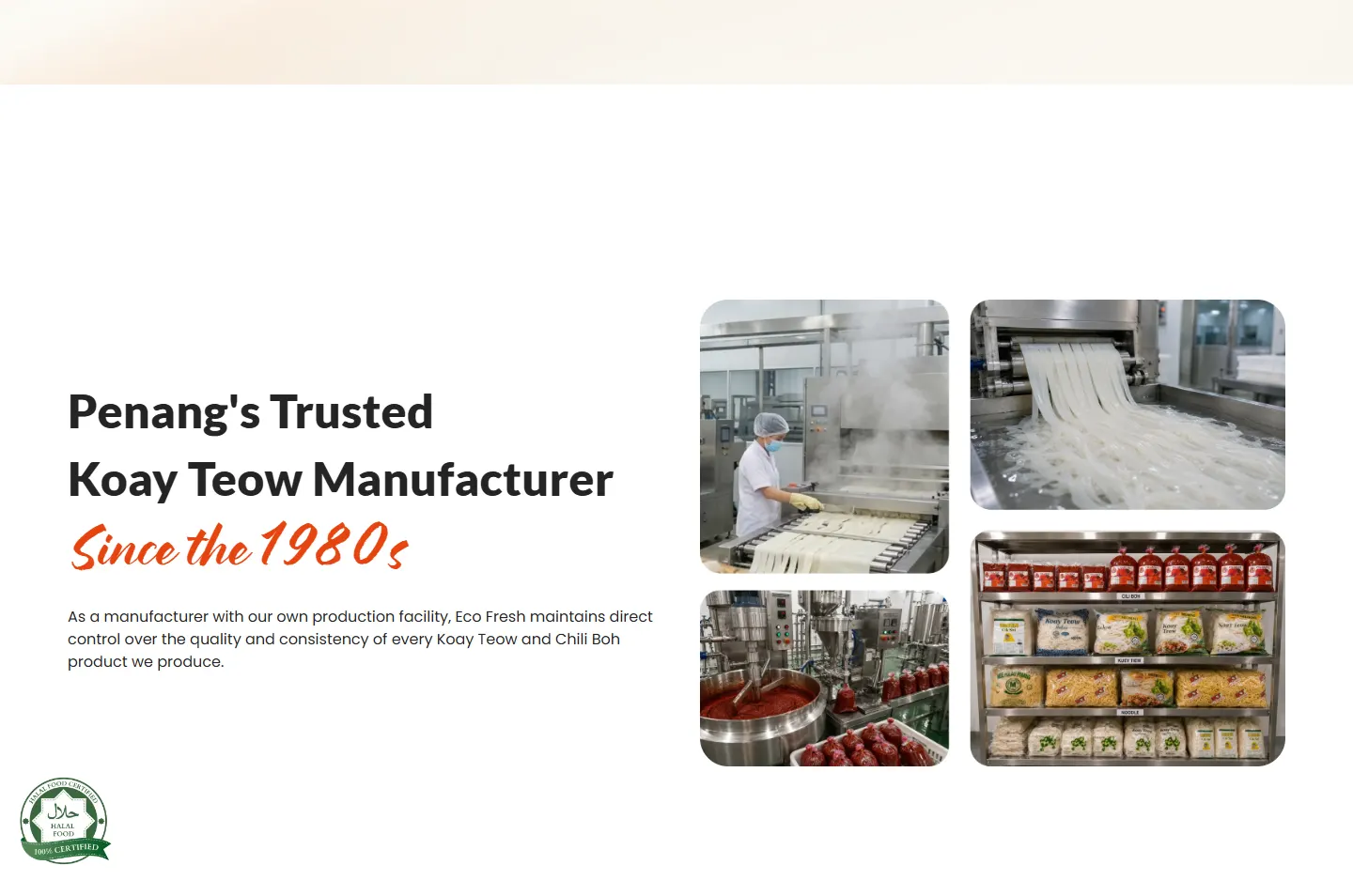
Four pictures, one brush line: Since the 1980s.
 5
Kitchens
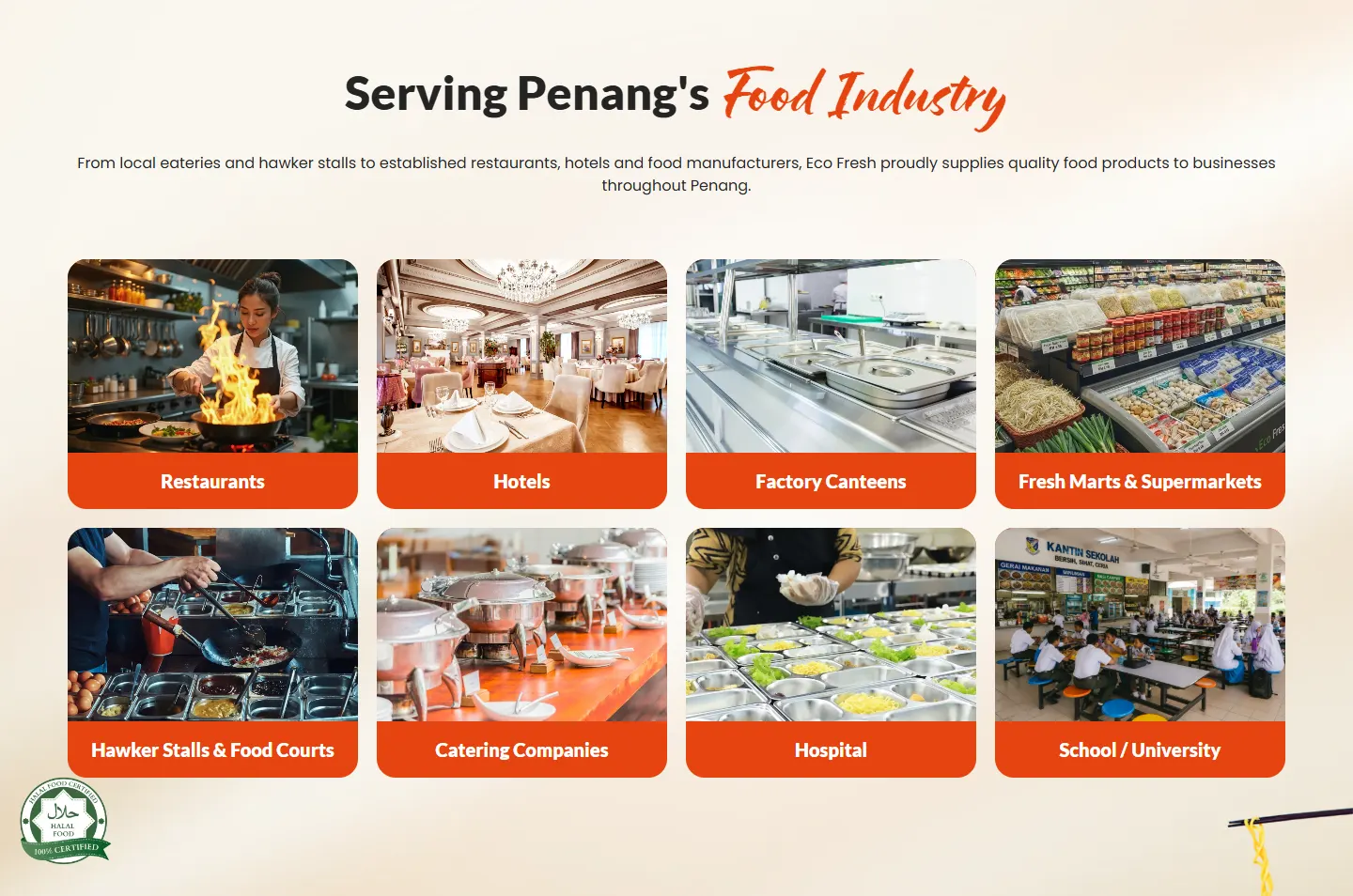
Eight types of customer, each with a picture.
 6
Contact
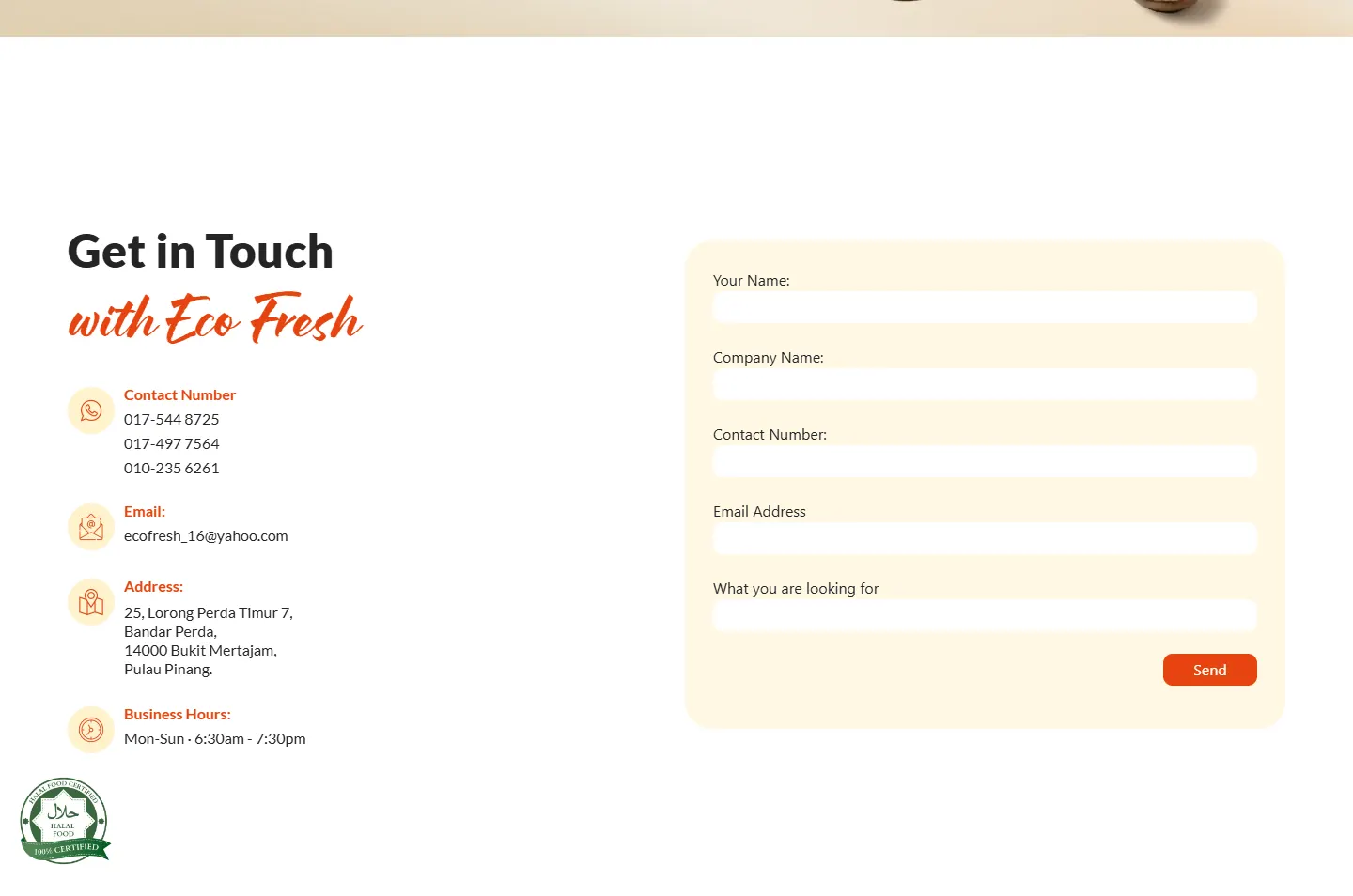
Three WhatsApp numbers and a short form.
“Only what we make ourselves can truly be trusted.” That sentence from the Eco Fresh story is why the factory appears in the first picture and again in a chapter of its own.
The story opens with one woman doing every step herself. A brush line is the nearest thing a web page has to handwriting, so it became her mark on each chapter.
Pale koay teow and red chili boh sit side by side on the first screen. The cream backgrounds and the red brush lines echo those two colours.
The food brings the colour, so the layout stays quiet. White and cream hold the page, and chili red is kept for the words that matter.
#FFFFFFSupply, factory and contact chapters#FFF8E3Product band, form, soft backgrounds#E5440FBrush lines, card labels, Send button#242424Headings and reading text#00C65EThe Contact Us buttonChili red is the only strong colour in the type, so the eye jumps from one brush line to the next. The Contact Us button stands apart in green.
From One Pair of Hands
Lato · HeadingsWe manufacture fresh Koay Teow and Chili Boh, and supply a complete range of noodles and related food products.
Poppins · Reading text
Each chapter heading carries a few words in Hello Bloomie, a brush script, set in chili red. It sits right against the heavy Lato lettering, so the page’s two voices meet in every heading.
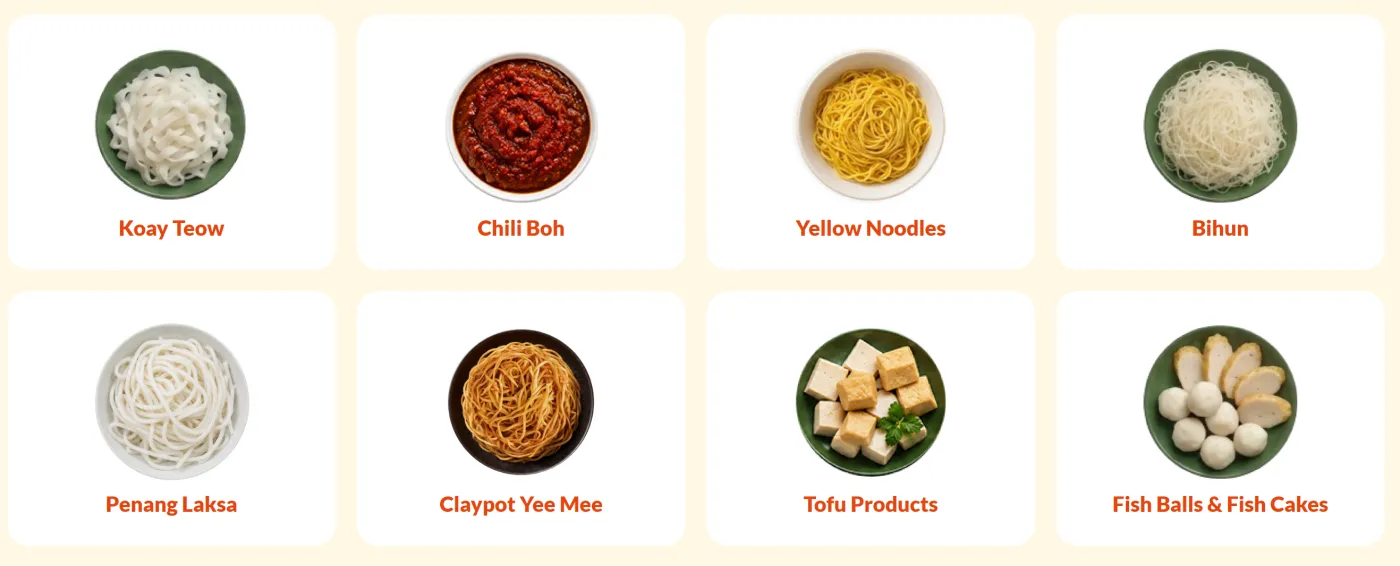
Eight white cards each hold one dish seen from above, with the name in red. A chef can check the range at a glance, and the round dishes make a tidy grid out of very different foods.
White and cream chapters take turns for most of the page. The bar above is the real page, to scale. Some joins are curved, and cut-out food such as the noodle bowl and the chili boh pack sits across the joins, so the food seems to carry on from one chapter to the next.
Scroll the page the way a head chef or a purchaser would. The highlight shows what to look at, and the note says why it is there.
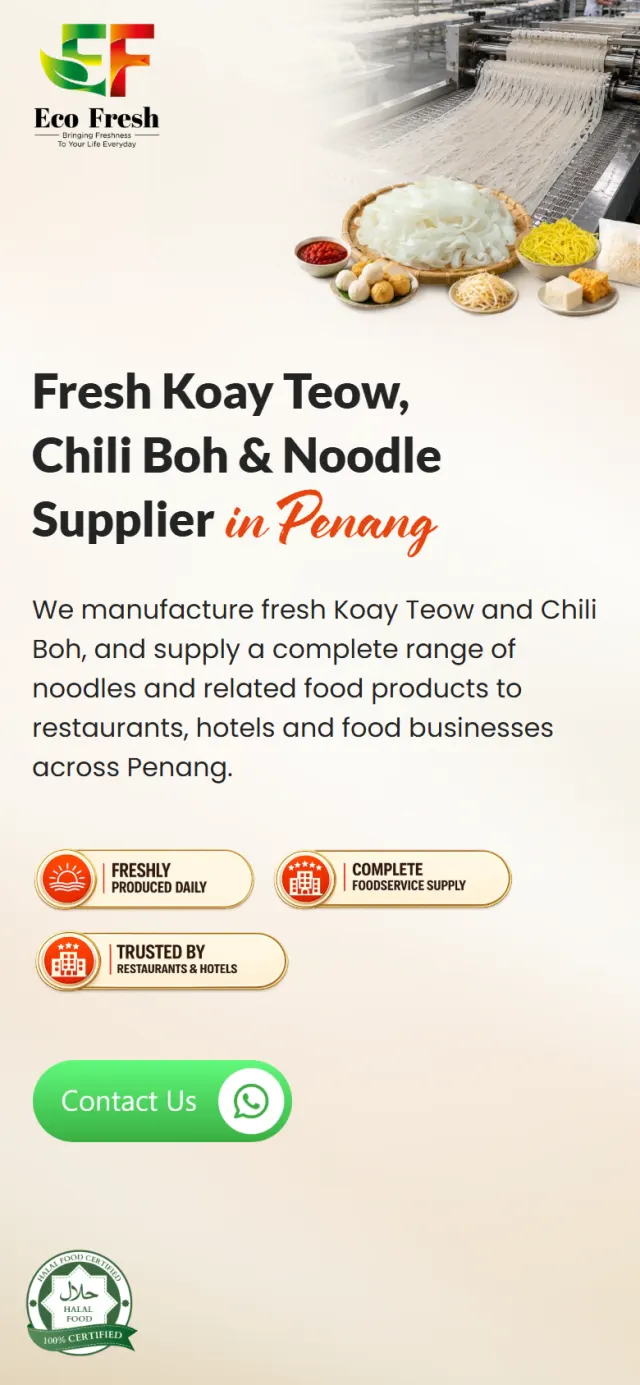
The first screen names the product and the place. On the right, koay teow runs along the machine behind a tray of koay teow, chili boh, tofu and fish balls. Three badges sum up the offer: freshly produced daily, complete foodservice supply, trusted by restaurants and hotels.
Why The maker and the product share one picture, so a buyer can see this is a manufacturer before reading a word about it.
Koay teow and chili boh come first, followed by yellow noodles, bihun, Penang laksa, claypot yee mee, tofu products, and fish balls and fish cakes.
Why A cook scans for what is on today’s list. Putting the two products made in-house first also puts the strongest reason to call at the top.
The chapter opens with “Our Story” in the brush script, beside a photo of the premises with the trucks parked in a row. Read More opens the full story in a pop-up, so nobody has to leave the page.
Why A purchaser who only wants the product list scrolls on. One who wants to know who is behind the koay teow presses Read More.
Four pictures show the work: steam over the line, koay teow coming off the machine, chili being cooked and packs on the shelf. “Since the 1980s” sits beside them in the brush script.
Why The words say Eco Fresh controls its own production. The pictures give a buyer the steps behind that sentence.
Restaurants, hotels, factory canteens, fresh marts, hawker stalls, caterers, hospitals and schools each get a picture and a chili-red label.
Why A canteen operator who finds their own kind of kitchen on the list knows Eco Fresh already serves people like them. The card says so without a boast.
Halal, MeSTI and hygienic manufacturing sit in three columns under one heading, each with a logo or icon and a plain sentence.
Why For many kitchens this decides whether they can order at all. The answer stays in plain view, away from the small print.
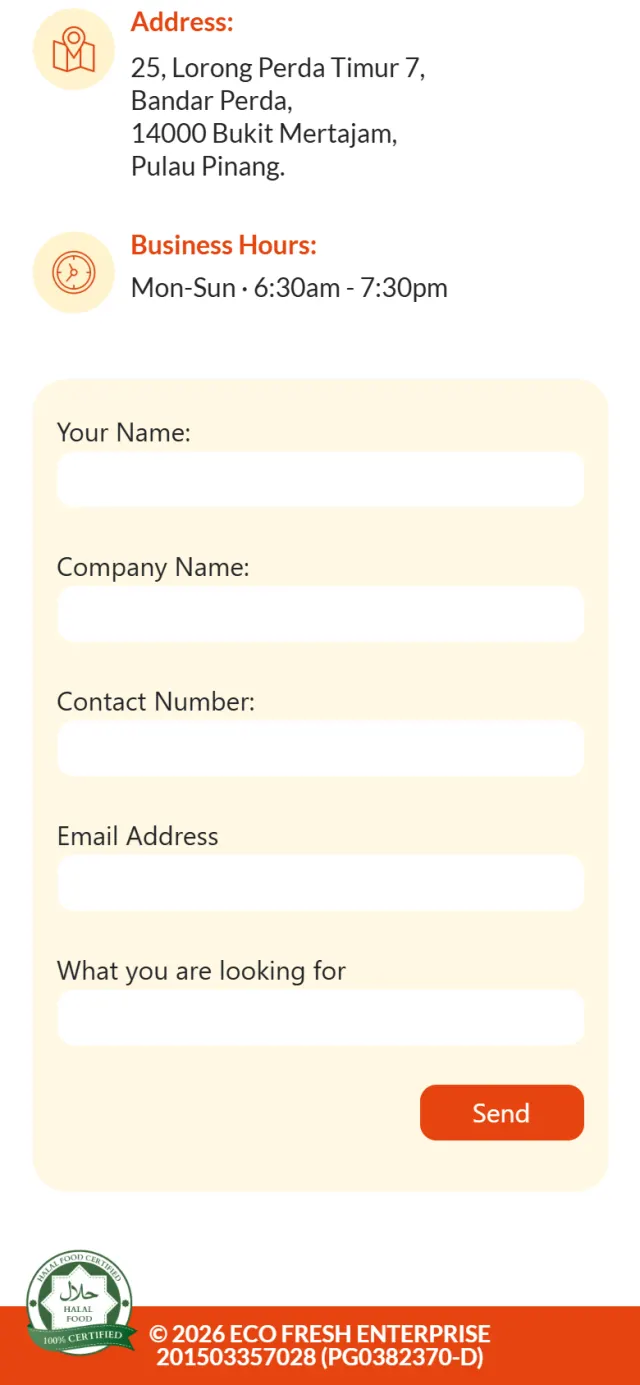
Each phone number opens a WhatsApp chat, and the address opens Google Maps. The form asks for a name, company, number, email and what the buyer is looking for.
Why A hawker may want to message now, and a hotel may want to send a written request. This chapter serves both, and the company field tells Eco Fresh who is asking.
Factory and food in one pictureIts own products come firstThe full story opens hereThe making, step by stepEight types of customer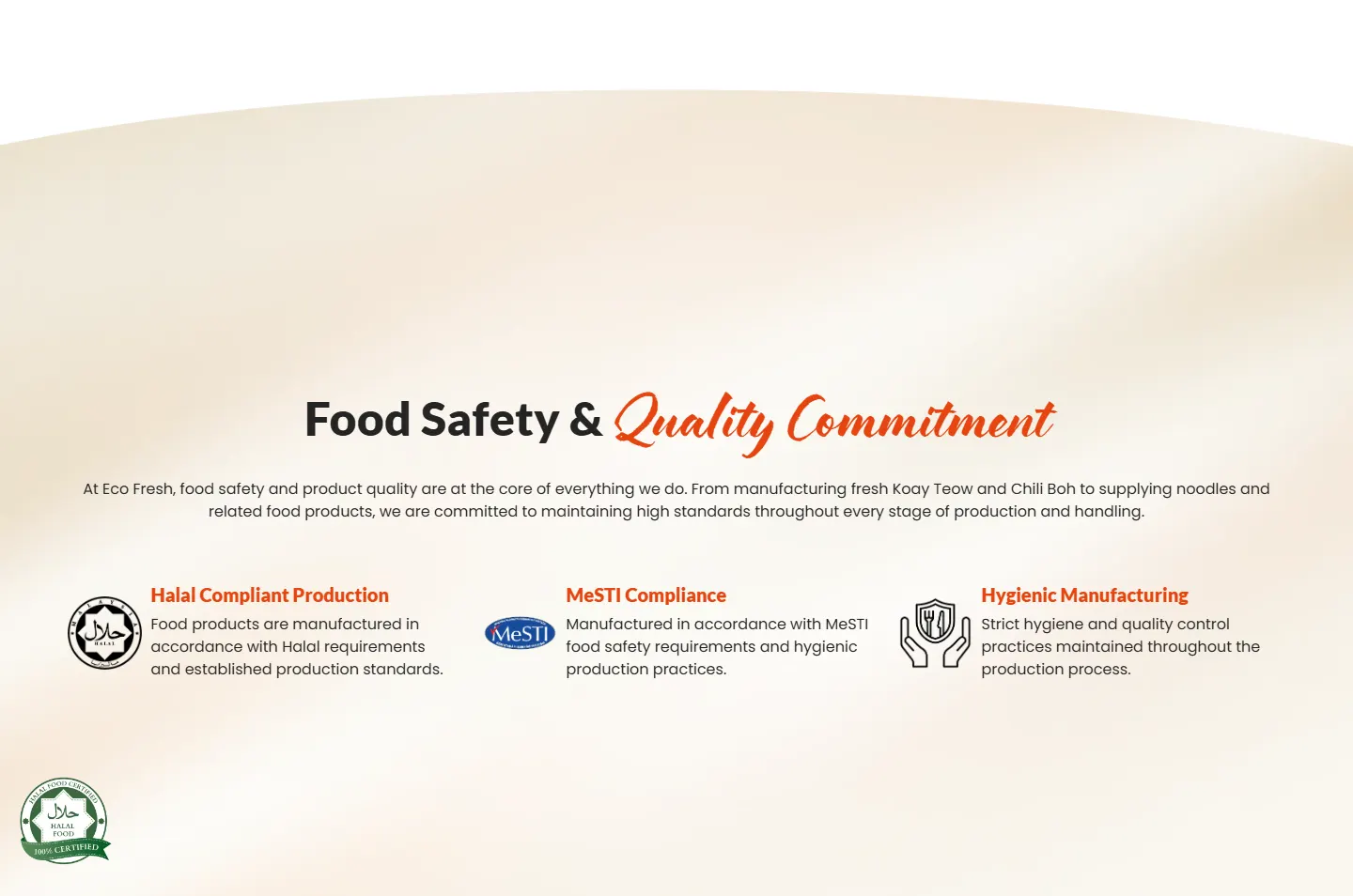 Three checks, one rowWhatsApp or the form
The layout changes on a small screen. The line and the tray move above the heading, so the first thing a cook sees on their phone is still the factory and the food.
A supplier’s site has to reach the kitchen that needs koay teow, then put that kitchen in touch with Eco Fresh. These parts handle both.
The page title and first heading name koay teow, chili boh, noodles and Penang, the words a kitchen would type into Google.
The address, map position, opening hours and contact details are set out in a format Google can read.
Own production, product range, delivery and Halal are answered on the page, and the questions are marked up for Google too.
Every number on the page opens a chat, with a short greeting already written.
The founder’s full story lives in a pop-up, so the home page stays short and nothing is lost.
It asks for the company as well as the person, plus what they are looking for, so Eco Fresh can tell who is asking and for what.
Every Potadot project starts by understanding the client's situation before anything is designed. See all seven steps
What Eco Fresh makes itself, what it supplies, and what a kitchen needs to know before it orders.
We shaped the company’s story and product list into short chapters in English, with the full story kept in a pop-up.
The two-voice heading came first, then the product and customer cards, then each chapter for desktop and phone.
Page title, business details and question markup set up, then launch and support.
Supplying other businesses? Tell Ricky about yours on WhatsApp at +6011-1142 1029.
We worked out the concept, wrote the content, designed the page and built the site in English, with search setup and WhatsApp contact links.
The chapters follow the order a buyer asks questions in, and there is only one next step. Every Contact Us button leads to the same chapter, with the numbers and the form.
Because Eco Fresh is both a factory and a business built by hand. The heavy type shows a manufacturer that can handle large orders, and the brush line keeps a human touch in every chapter.
Yes. Every site starts from the client’s own story and buyers, so yours would have its own idea. Tell us what you make and who you sell to, and we will show you how we would approach it.